Racing to Sustain Jevons' Paradox
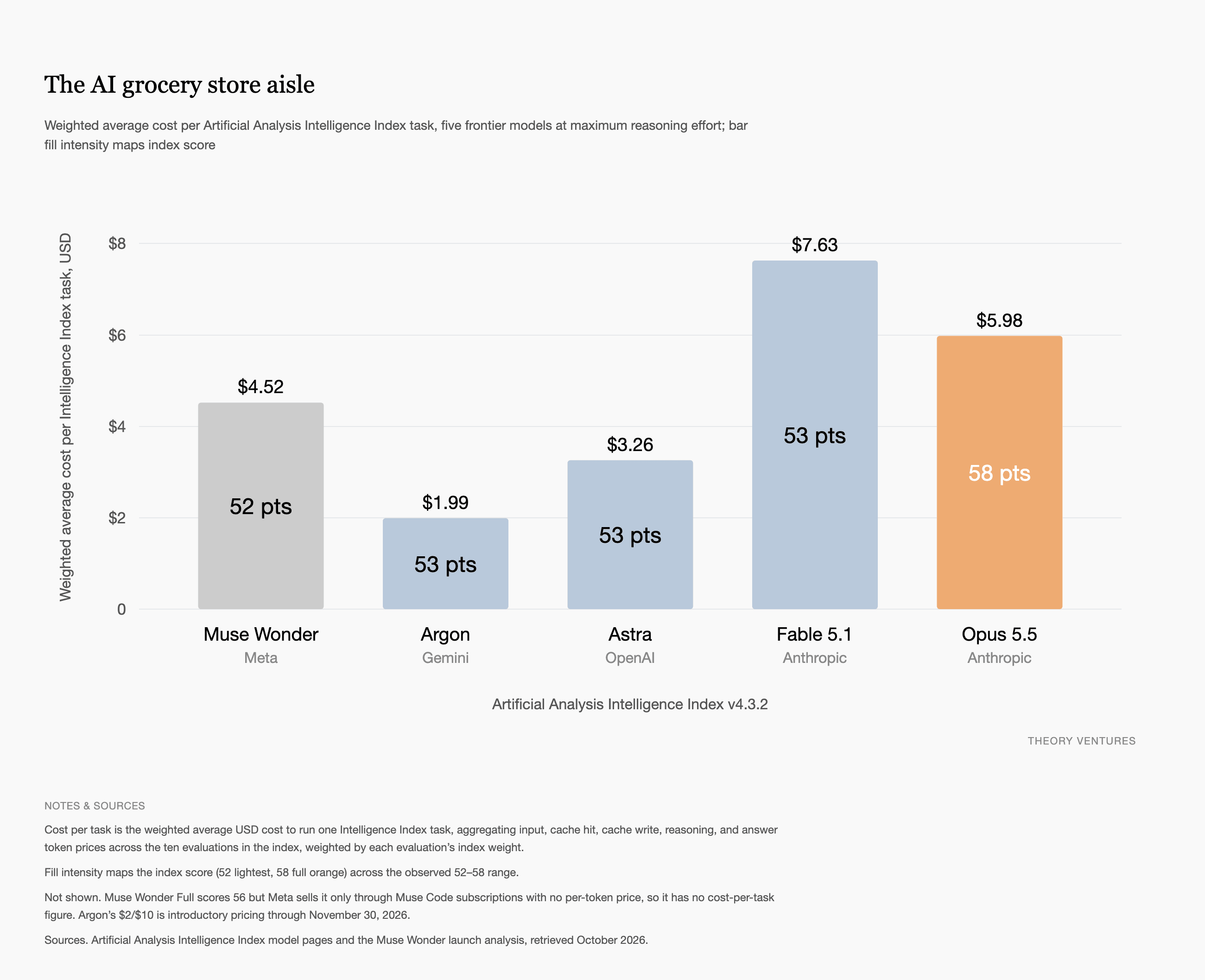
AI capacity constraints haven't hit spot prices yet, but memory has already doubled. Segmentation into premium, mid-market, & value tiers is how sellers race to keep Jevons' paradox alive.
In the age of slop, readers test authenticity. I lace posts with subliminal sincerity — the ampersand, neologisms, grammatical plumes, mimicry. Then AI edits it all. I've never had a ghost writer, but I did have a human editor. Was that any different?
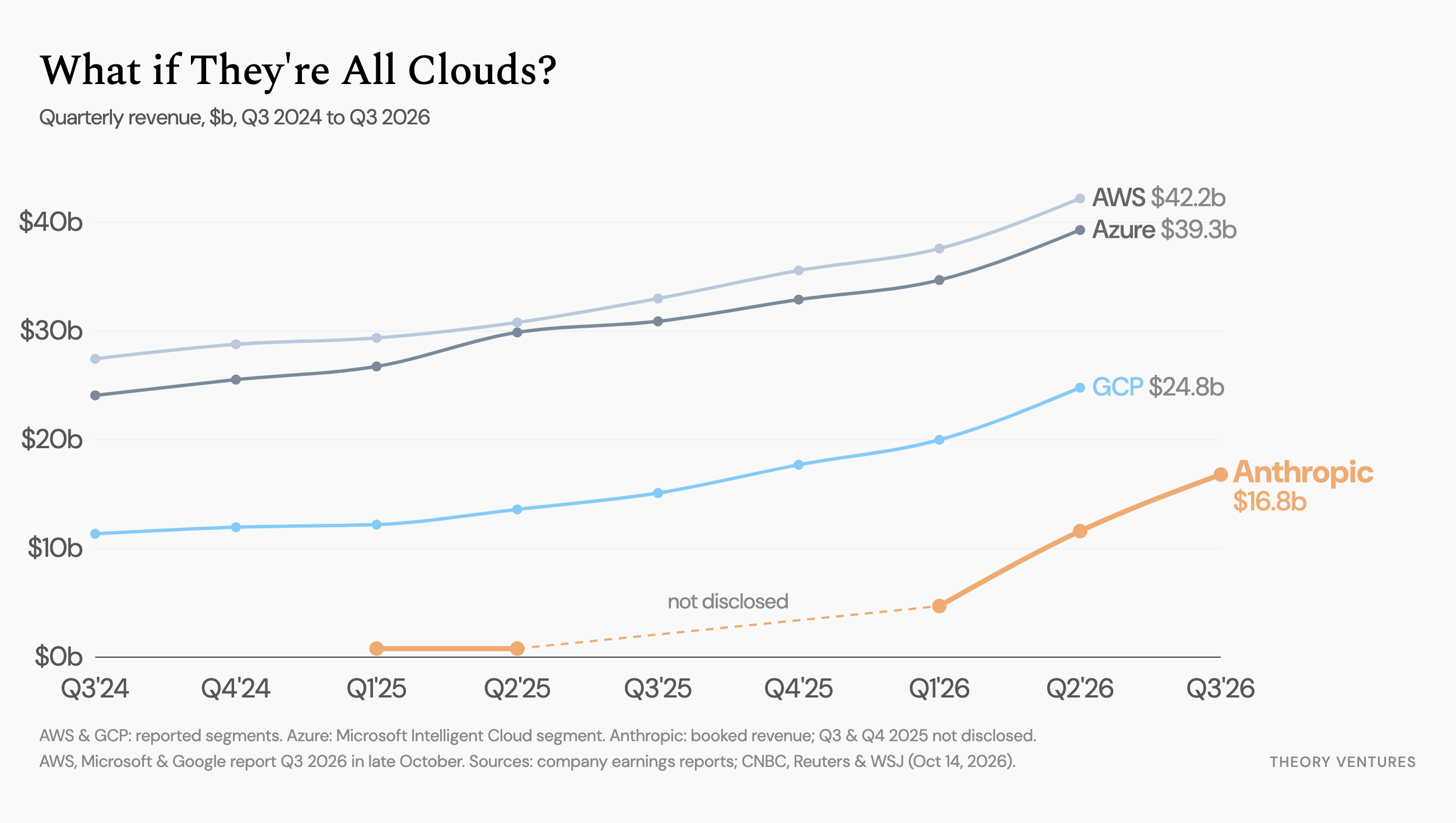
AWS grew 36.7% to $42.2b and Jassy called it a future $1 trillion revenue business. The backlog supports the near term; negative free cash flow is the price.
Google Cloud grew 82% to Azure's 43%. Owning the model & the chip funds the aggression; renting both, & carrying half a backlog in one borrower, funds the hedge.
The harness, not the model, is now the faster-moving variable in AI cost & capability. It owns the prefix, & the prefix is 86-98% of the bill.
OpenAI's year-old GPT-OSS commands 36% of Opus 4.8's OpenRouter volume. The reason is segmentation: buyers split across cost, speed & accuracy, & mixture-of-experts just moved the local boundary.
Google Cloud grew 82% to $24.8b in Q2 2026, began recognizing TPU system sales, & posted a $514b backlog as its growth rate converges toward NVIDIA's.
Per-engineer productivity from AI coding runs from -19% to 8x. The distribution has three tiers, & the gap between them is the operating layer, not the model.
Open-weight models keep catching closed frontier systems on Chatbot Arena Elo, 2023-2026, but have not materially led.
Slate Auto's $24,950 bare-bones pickup & Thinking Machines' 975B Inkling model share one business model: ship a vanilla, open base & monetize the customization layer.